

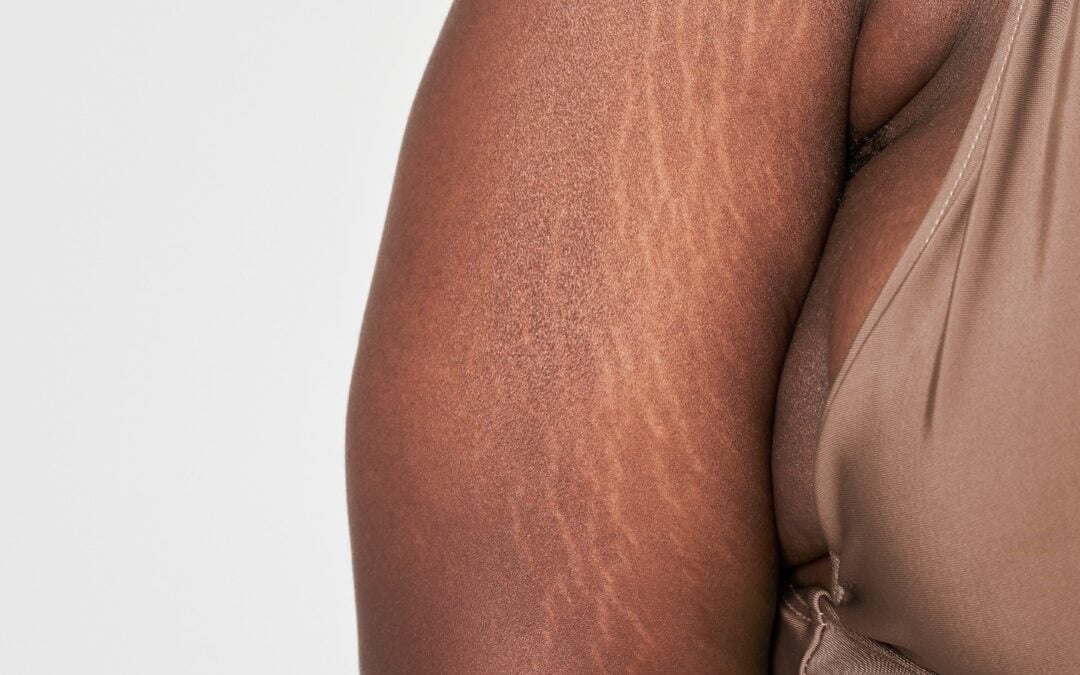
A woman walks into a dermatology clinic in Dubai Marina, points to the silvery lines running down her thighs, and asks what can actually make them disappear. The doctor talks lasers, microneedling, maybe six months of appointments and a few thousand dirhams later, improvement. That word does a lot of heavy lifting in the beauty industry, and it’s exactly why more people are quietly turning to stretch mark camouflage in Dubai instead of waiting on treatments that promise fading but rarely deliver disappearance.
Here’s what this post actually covers: how camouflage treatments work, why they are different from laser and microneedling routes, who they are realistically suited for, and what long-term results look like once the pigment settles into your skin. No sales pitch dressed up as science. Just the practical stuff.
What Is Stretch Mark Camouflage
Stretch mark camouflage isn’t a cream. It isn’t a laser burning collagen into overdrive either. It’s a form of paramedical tattooing, sometimes called medical scar camouflage, where a specialist deposits custom-matched pigment into the scarred or discolored tissue until it visually blends with the surrounding skin.
Old, white stretch marks (the kind that never respond well to creams because the skin there has already lost pigment-producing cells) are usually the toughest cases for standard dermatology. Camouflage doesn’t try to regrow that pigment biologically. It replaces the missing color mechanically, with tools and techniques borrowed from medical tattooing rather than skincare.
That distinction matters more than people realize.
Why Dermatologists Don’t Always Bring This Up
Not out of malice, to be fair. Most dermatology clinics are built around dermatological tools: lasers, chemical peels, needling devices. If camouflage tattooing is not something the clinic offers, it simply does not come up in the consultation. It’s a specialty of its own, closer to a skilled tattoo artist’s precision than a doctor’s prescription pad.
There’s also a marketing reality. Laser packages get sold in bundles of six or eight sessions. That’s recurring revenue. A camouflage session that shows visible change from visit one, sometimes an 80 percent improvement after a single sitting, does not fit as neatly into that model. It’s not a conspiracy exactly, just a gap between what’s profitable to recommend and what actually gets someone the result they’re after.
How Medical Scar Camouflage Actually Works
The process starts with a skin assessment. Tone, undertone, texture, even how the skin has healed around the mark, all of it factors into how the pigment gets mixed. This is where the art part comes in almost as much as the science.
A few things happen during a typical session:
- The specialist mixes a custom pigment blend to match your natural skin tone, not a generic shade off a shelf.
- Fine pigment deposits are placed into the treated area using medical-grade tools, stimulating the skin’s own collagen response along the way.
- The color is layered gradually rather than in one aggressive pass, which keeps the result looking natural instead of painted on.
Numbing cream handles most of the discomfort. Clients often describe the sensation as light scratching, nothing close to what people imagine when they hear the word “tattoo.”
Downtime is minimal too. Slight redness, maybe some tightness for a day, and that’s usually it.
Who This Is Really For
Not everyone needs this. If your stretch marks are recent and still reddish or purple, they might respond fine to time and moisturizer alone. Camouflage tends to make the biggest difference for marks that have already gone silvery-white and settled, the ones that laser and cream routines struggle with most.
It also tends to suit people who’ve tried the “wait and see” approach for years and are simply tired of it. Postpartum stretch marks, weight fluctuation marks, even growth-spurt marks from adolescence, these show up on people across a wide range of ages and body types, and the treatment works across most skin tones when the color matching is done properly. That last part matters a lot in a city like Dubai, where clients come from dozens of ethnic backgrounds with very different undertones.
Scar camouflage, the sibling treatment to stretch mark work, follows the same logic.Surgical lines, acne scarring, even areas affected by vitiligo can be softened using the same pigment-matching principle, just applied to a different kind of skin concern.
What Permanent Scar Concealment in Dubai Looks Like Long Term

Permanent scar concealment Dubai word in this industry, so it’s worth being precise. Pigment used in camouflage work is semi-permanent. It fades gradually over years rather than months, and most clients need occasional touch-ups to keep the blend looking fresh.
A few realistic expectations worth knowing before booking:
- Results typically hold for several years before any noticeable fading occurs.
- Sun exposure and skin turnover speed affect how long the pigment stays vivid.
- Touch-up sessions are usually quick and far less involved than the original treatment.
None of this means the result is temporary in any meaningful sense. It means it behaves the way skin does, changing slowly, needing occasional attention, same as any part of your body would.
Setting Realistic Expectations
camouflage makeup for scars treatments aren’t magic erasers. Texture changes from deep stretch marks (the slight indentation some people have) usually stay, even after color blending. What disappears is the visual contrast, the thing that catches your eye in a mirror or under bright light. For a lot of people, that’s the part that actually bothered them in the first place. Color, not texture, is usually what reads as “scar” to the human eye from a normal viewing distance.
Anyone considering this route should ask to see real client results, not stock photography. A good specialist will walk through healing timelines honestly instead of promising instant perfection.
Conclusion
Stretch mark camouflage sits in a strange gap between dermatology and paramedical artistry, which is probably why it does not get mentioned as often as it should. It works differently than lasers, it shows results faster in many cases, and it addresses old, stubborn marks that other treatments tend to give up on. Scar camouflage, meanwhile, offers a similar path for surgical marks, burns, and pigment loss that people have often lived with for years without a real solution.
If you have been searching for permanent scar concealment in Dubai and have not found an answer that actually made sense, this might be the missing piece. Skin Camouflage specializes in exactly this kind of work, and treats it as its own craft rather than an afterthought.
FAQs
Is stretch mark camouflage safe for darker skin tones?
Yes, when the pigment is properly color-matched. Specialists trained in medical scar camouflage adjust the blend for a wide range of undertones, which is essential for accurate, natural-looking results on medium to deep skin tones.
How is stretch mark camouflage different from laser treatment?
Laser treatments try to stimulate skin regeneration and fade discoloration over multiple sessions. Camouflage tattooing deposits matched pigment directly into the area, often producing visible change after the very first session, especially on old white stretch marks that lasers struggle with.
Does permanent scar concealment in Dubai hurt?
Most clients describe mild discomfort, similar to light scratching. Numbing cream is typically applied beforehand, and downtime is minimal, with slight redness usually settling within a day or two.
How many sessions does stretch mark camouflage usually need?
It depends on the size and depth of the marks, but most people see noticeable results after one session, with one to three sessions recommended for full, even coverage.