Transform Your Skin, Restore Your Confidence
Vitiligo Camouflage in Dubai
Personalised colour blending for selected, stable vitiligo patches
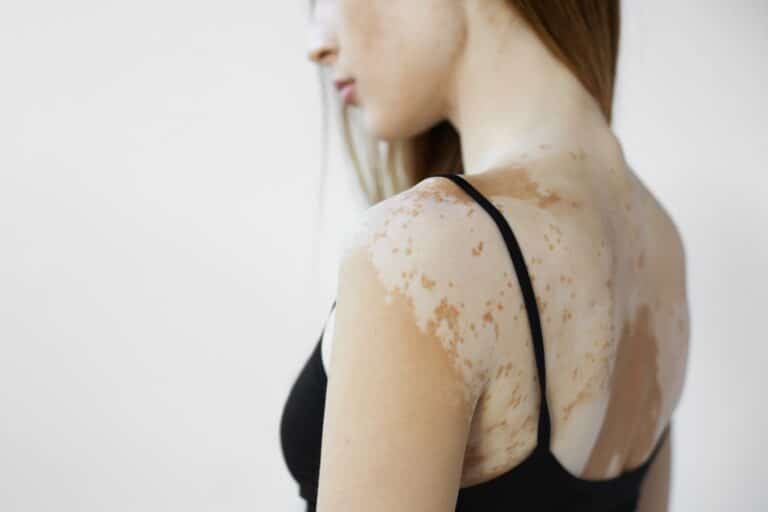
Vitiligo camouflage uses skin-toned pigments to reduce the visible contrast between selected white patches and the surrounding skin.
Begin with a consultation to understand whether micropigmentation is appropriate for your skin, your medical history and your expectations.

Google Rating
5 ★ ★ ★ ★ ★
What is vitiligo camouflage?
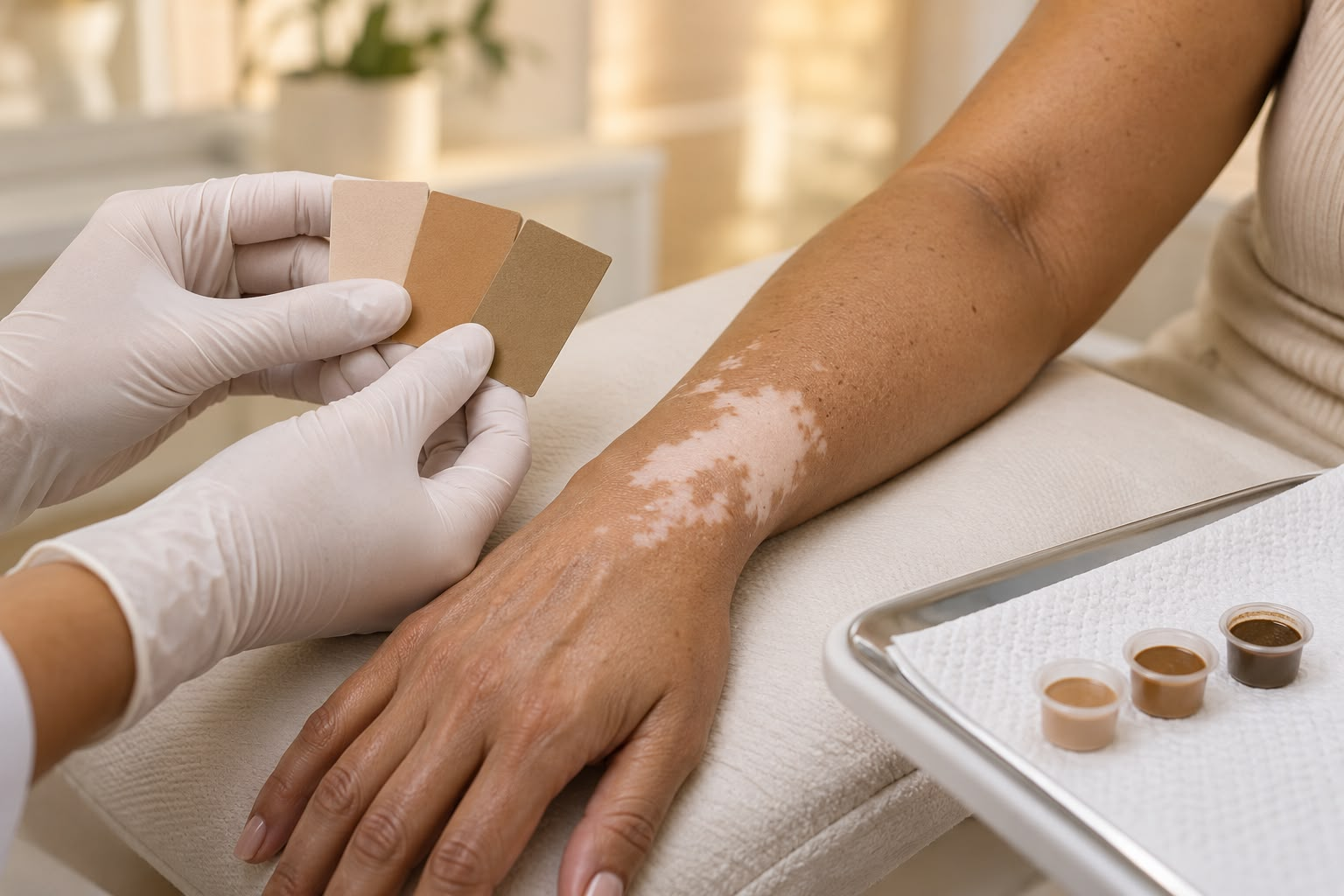
Vitiligo camouflage through micropigmentation is a form of cosmetic tattooing. Carefully selected pigments are implanted into areas that have lost their natural colour, aiming to create a closer visual blend with the surrounding skin.
It is different from temporary camouflage creams, which sit on the skin and can be washed off.
Micropigmentation does not restore pigment-producing cells, treat the underlying condition or prevent new patches from developing.

Tailored Care Solutions
We create tailored plans that meet your needs in just a few sessions.

Advanced Technology
We use top American technology for effective, high-quality results.

Comfortable, Quick Results
Our treatments ensure comfort and deliver lasting improvements.

Certified Beauty Experts
Our DHA-certified therapists provide expert and personalized care.


What can it help achieve?
For suitable individuals, camouflage may:
Reduce the contrast of selected depigmented patches.
Reduce the contrast of selected depigmented patches.
Reduce reliance on daily cover-up products in treated areas.
An exact colour match cannot be guaranteed. The result may look different across lighting conditions and as your natural skin tone changes.
Who may be suitable?
Micropigmentation may be considered for selected adults with localised, stable vitiligo following dermatological assessment.
Your consultation considers:
Whether new patches have appeared or existing patches have enlarged.
How long the condition has remained unchanged.
Whether injuries have previously triggered new patches.
The location, size and borders of the area.
Your skin tone, healing history and current treatment.
Whether a long-lasting pigment procedure suits your goals.
Stability is assessed over time. A patch looking unchanged in a photograph does not establish suitability, and previous stability cannot guarantee that vitiligo will remain inactive.
Why is dermatological assessment important?
Vitiligo can develop at sites of skin injury, including tattooing. This is known as the Koebner phenomenon.
Needling may trigger new patches or changes around a treated area. For this reason, a dermatologist’s assessment is an important part of deciding whether to proceed.
Active or spreading vitiligo is generally unsuitable for cosmetic tattoo camouflage.
Which areas can be assessed?
Selected patches on the face or body may be assessed individually.
Location matters: skin characteristics, friction, movement, sun exposure and pigment retention can affect the outcome. Not every area or patch is appropriate for treatment.
Large or widespread areas may be better managed with other approaches, including temporary camouflage and medical treatment.
How is the colour selected?
Colour matching considers your natural, untanned skin tone and undertone.
A custom pigment blend is selected to reduce contrast. However, tattoo pigment cannot reproduce every natural variation in skin colour or adapt as your skin tans.
A small test area may be recommended before a larger procedure. This can help assess healing and colour retention, but it cannot rule out all delayed reactions or future vitiligo activity.
Join Our Loyalty Program
Treat yourself to the ultimate beauty experience by joining our exclusive loyalty program. As a VIP member, you’ll enjoy a world of perks and special treatments designed just for you.
- 1
Ask at reception on your next visit and we will set your card up in a minute.
- 2
Collect a stamp every time you come in for a treatment.
- 3
Unlock your rewards as the stamps add up, all the way to 35% off.
Already have a card? Just bring it along to your appointment.


Exclusive Loyalty Card
Unlock Exclusive Benefits


Welcome to Our VIP Loyalty Program!
As a valued member, you enjoy
- Earn Points Every Purchase
- Exclusive Member Discounts
- Priority Booking Access
- Birthday Gifts, Discounts
- 10% Off Third Visit
- 35% Off Eighth Visit
- Member-Only Promotions Access
Your treatment journey
1. Consultation and medical review
We discuss your diagnosis, disease activity, medical treatment, healing history and expectations. Dermatological input is requested before proceeding.
2. Suitability and colour planning
We explain the potential benefits, limitations, alternatives and risks. If appropriate, a pigment blend and test-area plan are agreed.
3. Micropigmentation
Pigment is carefully implanted into selected areas. Appointment length depends on the location, size and complexity of the patch.
4. Healing and review
The skin is allowed to heal before the colour is assessed. Further treatment may be considered if appropriate, based on skin response and pigment retention.
Results and expectations
The aim is reduced colour contrast—not complete invisibility.
Pigment may heal unevenly, fade or change shade. Borders may remain visible, and the colour match may become less accurate if the surrounding skin tans or natural pigmentation returns with medical treatment.
If vitiligo spreads beyond the treated area, the camouflage will not prevent or cover the new patches.
Healing and recovery
Temporary redness, swelling, tenderness, dryness and light crusting can occur.
Fresh pigment may appear darker or warmer than the final healed colour. Your practitioner will explain the expected recovery process and when the area can be reviewed.
Contact the clinic if you notice increasing pain, spreading redness, discharge, new white patches or other unexpected changes.
How long does it last?
Micropigmentation is a tattoo-based procedure. Pigment can remain in the skin for many years, even if it fades or changes colour.
It should not be chosen on the assumption that it will disappear after a fixed period. Colour adjustments and removal can be challenging.
Aftercare
Follow your personalised written instructions, which may include:
* Gentle cleansing and recommended aftercare.
* Avoiding picking, scratching and rubbing.
* Avoiding swimming, soaking, saunas and heavy sweating during early healing.
* Keeping unapproved skincare products away from the area.
* Protecting the skin from sun exposure.
* Coordinating further skin procedures with your treatment providers.
Camouflage pigment does not restore the skin’s natural sun protection. Continue appropriate sun protection after healing.
Risks and limitations
Possible risks include:
* New or enlarged vitiligo patches following skin injury.
* Infection or allergic reactions.
* Scarring and pigmentation changes.
* Uneven pigment retention or pigment spreading beyond its intended placement.
* Colour mismatch, fading or changes in shade.
Assessment and a test area help inform the decision but cannot eliminate these risks.
Frequently Asked Questions
Find answers to common questions about our Vitiligo Camouflage service. Learn how it works, what to expect, and how we can help you feel confident in your skin again. Still have questions? We’re only a call away!
Does camouflage cure vitiligo?
No. It changes the appearance of selected patches by adding pigment. It does not treat the underlying condition or stop its progression.
Can I continue my vitiligo medication or phototherapy?
Discuss the procedure with your treating dermatologist first. Treatment timing and aftercare need to be coordinated. Do not stop prescribed medication without medical advice.
Will the pigment tan with my skin?
No. The surrounding skin may darken while the implanted pigment remains relatively unchanged, making the colour difference more visible.
Can I choose temporary camouflage instead?
Yes. Specialist camouflage creams offer a removable option without needling. They may be preferable if your condition is active, your skin tone changes frequently or you do not want implanted pigment.
How much does it cost?
Pricing depends on the size, location and complexity of the area. A personalised quotation is provided after suitability has been assessed.
Is stable vitiligo completely safe to tattoo?
No procedure is risk-free. Even previously stable vitiligo may react to skin injury. Dermatological assessment and informed consent are essential.
What if my natural colour returns?
Natural repigmentation can change the appearance of an area containing tattoo pigment. This possibility should be discussed before treatment, particularly if medical treatment is ongoing.
Is micropigmentation the same as camouflage makeup?
No. Camouflage makeup is temporary and removable. Micropigmentation implants long-lasting pigment into the skin and carries different risks.
How many sessions will I need?
This varies according to the area, healing response and colour retention. A personalised plan is discussed after assessment; a fixed result or session count cannot be guaranteed.
Explore your camouflage options
Send clear, unfiltered photographs in natural light, together with information about your diagnosis, recent changes and current treatment.
Photographs help begin the discussion. Final suitability requires an in-person assessment and dermatological review.
Send clear, unfiltered photographs in natural light, together with information about your diagnosis, recent changes and current treatment.
Photographs help begin the discussion. Final suitability requires an in-person assessment and dermatological review.
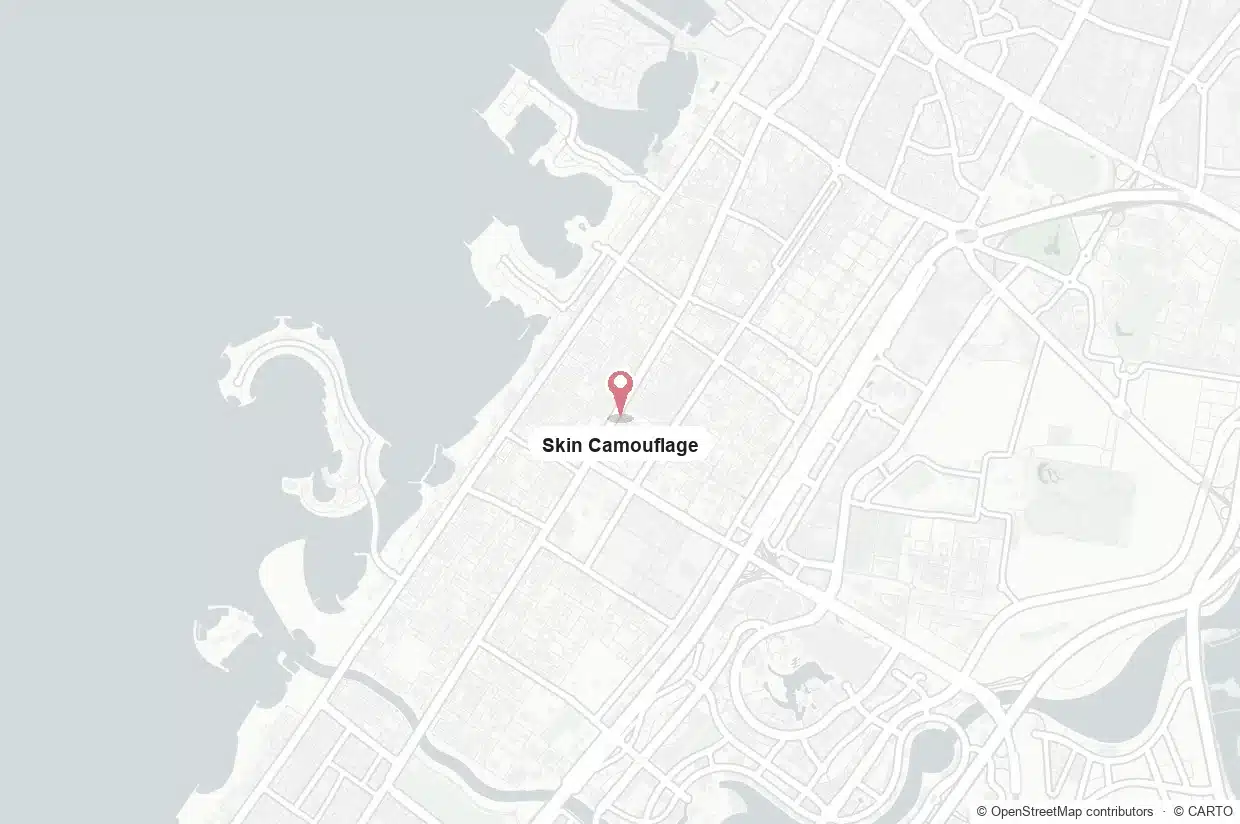
Visit Us in Jumeirah 1, Dubai
Located in Jumeirah 1, Skin Camouflage offers expert beauty and skincare treatments in a relaxing environment. Find us inside Amir Beladi Polyclinic, open daily except Sundays from 11 AM to 6 PM.
For quick directions, scan the QR code or use Google Maps. . Visit Skin Camouflage Dubai to experience advanced care that enhances confidence and natural radiance
Address
Amir Beladi Polyclinic, 351 Al Wasl Rd - Al Bada' - Jumeirah 1 - Dubai
Open Monday to Saturday, 11am to 6pm


Scan the QR Code to Instantly Locate Us!
 Google Map
 Waze
Book Your Free Consultation
Get expert advice tailored to your unique needs. Schedule a free consultation today and discover the perfect treatment plan for your beauty goals. Let’s start your transformation journey!
Service Hours
Visit us during our service hours for exceptional treatments.
Open Six Days a Week
By appointments only
351 Al Wasl Rd – Al Bada’ – Jumeirah 1 – Dubai
CALL US